A smart indoor garden can provide light, circulate water, remind you about nutrients, and make it easier to grow herbs or leafy greens without outdoor space. It cannot make every plant suitable for every room.
The right system is the one that fits the plants you genuinely want to grow, the space you can permanently dedicate, and the amount of cleaning and pruning you are willing to do. Choosing by appearance or pod count alone often leads to an expensive appliance that is inconvenient to maintain.
Start with four questions: What will you grow? Where will the mature plants fit? How often can you refill and clean the system? Can you continue using it if proprietary pods, applications, or replacement parts become unavailable?
Begin With a Ten-Minute Room Audit
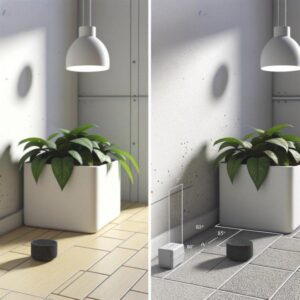
Measure the intended location before comparing products. A garden that technically fits on a counter may still block a cabinet, interfere with food preparation, shine into a bedroom, or become difficult to refill once the plants grow.
- Measure the counter, shelf, table, or floor area rather than estimating it.
- Open nearby cabinets and doors to confirm they will not strike the lamp or plants.
- Check whether the light will be distracting while watching television, sleeping, or working.
- Leave enough space to remove the reservoir, grow deck, or pump when cleaning is required.
- Avoid placing the system directly above or beside appliances that create strong heat changes.
- Choose a stable surface that can support the full weight of the garden, water, plants, and accessories.
Water is heavy, and a filled system can weigh considerably more than it appears in product photographs. Large reservoirs and floor-standing gardens need especially stable support.
Understand the Type of Garden You Are Buying
“Smart indoor garden” is a broad term. Some products are compact hydroponic systems, while others are planters with automated watering, built-in lights, or environmental sensors.
Water-Based Garden
Plants grow without soil and receive water and nutrients through a reservoir. These systems usually require nutrient management, pump checks, root inspection, and regular cleaning.
Self-Watering Planter
A reservoir supplies moisture through a wick or similar method. It may be quieter and simpler, but it does not necessarily provide automated lighting or active water circulation.
Sensor-Assisted Planter
Plants grow in potting material while a device monitors or controls water and light. Drainage, soil quality, and root space remain important.
Hydroponic systems can use space efficiently and support year-round indoor production when sufficient artificial light is available. They are not maintenance-free. Pumps, water levels, nutrients, roots, pests, and sanitation still require attention.
Choose the Plants Before Choosing the Pod Count
The number of planting openings does not tell you how many mature plants the garden can support comfortably. Six small lettuce plants may fit where six mature basil, tomato, or pepper plants would become crowded.
| Growing Goal | Suitable System Features | Important Limitation |
|---|---|---|
| Leaf lettuce and compact greens | Wide light coverage, moderate vertical clearance, accessible reservoir, and room for repeated harvesting | Crowded leaves reduce airflow and can shade smaller plants. |
| Basil, parsley, cilantro, or chives | Adjustable light height, easy pruning access, reliable nutrient reminders, and removable plant sites | Different herbs can germinate and grow at very different speeds. |
| Microgreens | Shallow tray, broad even light, easy sanitation, and simple crop replacement | A pod-based garden may be less practical than a dedicated tray. |
| Dwarf peppers or compact tomatoes | Tall light travel, strong plant support, larger reservoir, more root space, and access for pollination | Fruiting plants require more light, time, space, and maintenance than leafy greens. |
| Starting seedlings | Adjustable light close to the seedlings, removable tray or pods, timer, and easy transplant access | A system designed for mature herbs may not provide the best layout for many seedlings. |
Leafy greens and herbs are often practical choices for compact indoor hydroponic systems because they are generally smaller and can be harvested over a shorter period. Fruiting crops may be possible, but they usually need more light, vertical clearance, root volume, support, and time.
Do not assume every planting opening should be filled. Leaving empty spaces can improve light distribution, airflow, harvesting access, and room for larger plants. Cover unused reservoir openings so light does not reach the nutrient solution.
Evaluate the Grow Light, Not Just the Word “LED”
LED describes the lighting technology, not whether the light is strong enough or evenly distributed for the intended plants. Two systems can both use LEDs and provide very different growing conditions.
What to Examine
Look for the illuminated area, adjustable height range, distance between the lamp and mature plants, timer options, heat near the leaves, and whether the manufacturer provides useful plant-light information.
Watts describe energy use rather than the exact amount of plant-usable light reaching the leaves. Brightness to the human eye also does not perfectly represent the light plants receive.
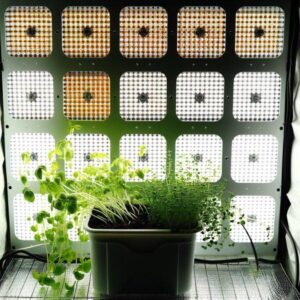
- Prefer a lamp that covers the full planting area rather than only the center.
- Check whether the light can remain close enough to young plants and rise high enough for mature ones.
- Confirm that the timer can provide an appropriate daily light and dark period.
- Look for visible shading when plants occupy the outer positions.
- Check whether the light assembly can be replaced if it fails.
- Consider whether the light color is comfortable in a kitchen, office, or living area.
University of Minnesota Extension notes that indoor hydroponic lettuce and herbs commonly need substantial daily artificial lighting and suitable distance from the light source. The correct schedule and distance still depend on the crop, lamp output, and system design.
A sunny window may contribute useful natural light, but indoor hydroponic production often still benefits from supplemental lighting, particularly during darker seasons or in rooms without strong direct sun.
Reservoir Design Affects Daily Convenience
A larger reservoir generally needs refilling less often, but capacity alone does not determine whether the system is easy to use. Access, visibility, cleaning, pump protection, and the shape of the tank matter just as much.
Visible Water Level
A clear indicator makes it easier to confirm the actual water level instead of depending only on an electronic reminder.
Easy Refill Opening
You should be able to add water without moving the light, lifting mature plants, or spilling near electrical components.
Accessible Pump
Pumps and intake screens can collect roots or debris. A removable, replaceable pump is easier to maintain than a sealed component.
Simple Drainage
A tank that is awkward to lift or empty can make cleaning difficult, especially after the plants develop long roots.
Refill frequency changes as plants mature. A system that uses little water during germination may need frequent attention once a dense crop develops.
Before purchasing, read the cleaning procedure in the manual. Determine whether the reservoir, grow deck, pump, tubing, and pod holders can be removed without special tools.
Useful Automation Versus Decorative Technology
Automation is valuable when it prevents missed maintenance or makes the system easier to understand. It is less valuable when essential functions depend on an unreliable application or cloud service.
| Feature | When It Is Useful | What to Confirm |
|---|---|---|
| Automatic light timer | Provides a consistent daily light schedule without manual switching. | Can the schedule be adjusted, and will it continue after a power interruption? |
| Low-water alert | Helps prevent the reservoir from falling below a safe operating level. | Is there also a visible way to confirm the water level? |
| Nutrient reminder | Reduces the chance of forgetting the manufacturer’s feeding schedule. | Does it measure nutrients or simply count time since the last reset? |
| Mobile application | Can provide remote alerts, schedules, records, or system status. | Which functions remain available without Wi-Fi, an account, or a subscription? |
| Automatic pump cycle | Circulates or aerates nutrient solution according to the system design. | Can the pump be inspected, cleaned, replaced, or manually tested? |
| Plant database | May suggest schedules or provide basic growing reminders. | Are recommendations specific to the system, or are they general marketing content? |
A nutrient reminder does not necessarily measure nutrient concentration. Many devices simply notify the user after a set number of days. The correct dose still needs to be measured according to the product instructions.
Check Consumables and Replacement Parts Before Buying
The purchase price is only one part of the cost. Pods, seeds, nutrients, wicks, growing media, filters, pumps, lights, covers, and support accessories may need replacement.
The Replacement Test
Can you use your own seeds, or only pre-seeded branded pods?
Are replacement sponges, baskets, or wicks standard sizes?
Is the formula clearly labeled, consistently available, and reasonably priced?
Can it be removed, cleaned, tested, and replaced separately?
What happens if the LED panel or power supply fails after the warranty?
Does the garden remain usable if the application or cloud service is discontinued?
An open system that accepts your own seeds can provide more crop choice and reduce dependence on one supplier. A proprietary system may offer simpler setup, but buyers should understand the long-term cost and availability of compatible supplies.
Match the Garden to Your Home Environment
Noise, Heat, and Airflow Are Easy to Overlook
Circulation pumps, air pumps, cooling fans, and vibrating covers can create noticeable sound in a quiet room. Product descriptions may not reflect how the unit sounds on a hard counter or after roots begin touching internal components.
- Read owner feedback specifically about pump and fan noise rather than relying only on general ratings.
- Check whether the pump runs continuously or in scheduled cycles.
- Confirm that air can move around dense foliage.
- Avoid placing the garden against heating vents, radiators, ovens, or other strong heat sources.
- Leave space around the system instead of enclosing it tightly inside a cabinet.
Dense plantings can restrict airflow and increase the chance of leaf disease. Regular pruning and sensible spacing are more useful than filling every opening simply because it is available.
Safety and Household Practicality
Indoor gardens combine water and powered equipment. Use the power supply, outlet, cable routing, and cleaning method specified by the manufacturer.
- Keep plugs, power supplies, switches, and electrical connections dry.
- Do not operate damaged cables, cracked reservoirs, or leaking equipment.
- Unplug the system before cleaning components when instructed.
- Do not place it where it can be pulled down by a cable.
- Store concentrated nutrients away from children, pets, food, and drinking containers.
- Use only replacement power supplies and components approved for the model.
A compact garden is not automatically childproof or pet-proof. Cats may chew leaves, knock over light arms, or drink from accessible water openings. Some plants can also be unsafe for pets, so confirm the safety of every species brought into the home.
Common Buying Mistakes
- Buying for maximum pod count: mature plants may need much more space than seedlings.
- Ignoring maximum plant height: basil, tomatoes, peppers, dill, and other plants can quickly reach the light.
- Assuming an LED label guarantees sufficient light: coverage, intensity, distance, and duration all matter.
- Choosing an inaccessible reservoir: difficult refilling and cleaning make maintenance easier to postpone.
- Overvaluing the application: an attractive interface cannot compensate for a weak pump, poor light, or unavailable parts.
- Mixing plants with incompatible needs: crops sharing one reservoir generally receive the same nutrient solution and water conditions.
- Placing the system above a warm appliance: strong temperature changes can affect plants and water conditions.
- Failing to price consumables: proprietary pods and nutrients can substantially change long-term cost.
- Expecting zero maintenance: every system requires observation, pruning, refilling, and cleaning.
A Practical Pre-Purchase Process
- Write a realistic plant list. Choose two or three crops you will actually eat or use rather than planning around every plant shown in advertisements.
- Measure the permanent location. Include full lamp height, plant canopy, refill access, cabinet movement, and safe cable routing.
- Check mature plant dimensions. Use the seed packet or a reliable growing guide instead of judging by seedling photographs.
- Read the complete manual. Review setup, nutrient dosing, cleaning, water changes, pump access, troubleshooting, and warranty limitations.
- Price one year of supplies. Include nutrients, pods, growing media, filters, replacement parts, and any subscription.
- Confirm offline operation. Determine whether lighting, pumps, and basic controls continue working without Wi-Fi or a mobile account.
- Inspect the return and warranty terms. A garden may not reveal unacceptable noise, light spill, leaks, or awkward maintenance until it is running at home.
What to Watch During the First Month
The first planting cycle will show whether the system fits your routine. Record a few simple observations rather than changing multiple settings at once.
- How frequently the reservoir needs to be refilled
- Whether all planting positions receive even light
- How often the lamp height needs adjustment
- Whether the pump is easy to hear from nearby rooms
- How quickly plants begin crowding one another
- Whether alerts match the actual water and nutrient condition
- How difficult the first complete cleaning is
Remove failed seedlings, cover empty openings, prune before plants touch the light, and inspect for pests regularly. For a detailed maintenance routine, see our guide to maintaining an indoor smart garden.
Frequently Asked Questions
Is a smart indoor garden better than a sunny windowsill?
Not always. A suitable windowsill can support some herbs and houseplants with less equipment. A smart garden becomes more useful when natural light is insufficient, when automated lighting improves consistency, or when a compact hydroponic system better fits the available space.
How many pods should a beginner choose?
Choose based on mature plant size rather than the largest available number. A small system with sensible spacing can be easier to manage than a larger garden filled with crowded plants.
Can tomatoes grow in a countertop garden?
Compact varieties may grow in some systems, but they need adequate light, height, root space, support, nutrients, and pollination. Check the mature dimensions and the manufacturer’s crop guidance before planting.
Does a larger reservoir always make a garden better?
No. It can reduce refill frequency, but it also adds weight and may be harder to empty or clean. Reservoir access, water-level visibility, pump protection, and drainage are equally important.
Are proprietary seed pods a problem?
They can simplify setup, but they may limit crop choice and increase long-term cost. Check whether empty reusable baskets or compatible growing media are available for your own seeds.
Can a smart garden be left unattended during a vacation?
That depends on reservoir capacity, plant maturity, trip length, and system reliability. Mature plants may use water quickly, so remote alerts should not replace a person checking the garden during longer trips.
How important is app control?
It is useful for remote alerts and scheduling, but basic lighting, pumping, and manual controls should ideally remain usable if Wi-Fi or the cloud service becomes unavailable.
The best smart indoor garden is not the one with the longest feature list. It is the one you can place safely, maintain without frustration, and use for plants that fit its light, root space, and height.
Begin with your room and your plant goals. Then compare lighting coverage, reservoir access, replacement parts, seed flexibility, noise, cleaning, and offline operation.
A smaller, serviceable system that produces herbs you regularly use can provide more value than a larger model that becomes crowded, expensive, or inconvenient after the first planting cycle.
Sources and Further Reading

The BotaniQ Editorial Team writes and maintains practical guides about indoor gardening, smart irrigation, plant care, garden automation, and growing technology. Where relevant, articles reference official documentation, university extension resources, and other reputable sources. Content is updated when material information changes.