Hydroponics did not give apartment residents a garden without limitations. It changed which limitations matter.
Instead of searching for a sunny yard, a grower can work with a shelf, a reservoir, artificial light, and a water-based nutrient solution. The tradeoff is that soil management is replaced by equipment management. Pumps, lighting, water quality, roots, sanitation, and electrical safety become part of the growing routine.
That exchange can be worthwhile in a small home, particularly for herbs and leafy greens. It is less convincing when the system is too large for the room, difficult to drain, noisy at night, or dependent on maintenance the owner cannot perform consistently.
What Hydroponics Changed for People Without a Yard
Hydroponics is the practice of growing plants with a water-based nutrient solution instead of relying on soil as the main root environment. Roots may sit directly in the solution or be supported by a soilless material such as clay pebbles, perlite, coconut coir, or specialized growing media.
For apartment residents, that creates several practical changes.
A suitable growing area can be created on a counter, cart, shelf, or dedicated stand when the system receives adequate artificial light and remains accessible for care.
Water level, root color, pump operation, nutrient condition, and reservoir cleanliness can often be inspected more directly than the interior of a soil-filled container.
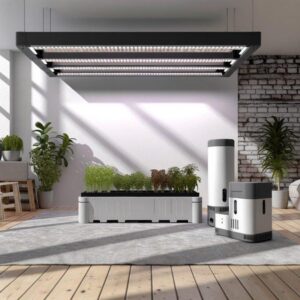
Compact lights and narrow growing channels allow leafy crops to be arranged across shelves rather than depending entirely on floor area.
Closed systems can collect and reuse nutrient solution instead of allowing every watering to drain away. Actual efficiency still depends on leaks, evaporation, cleaning, crop choice, and system management.
Herbs and leafy greens can be grown throughout the year when light, temperature, airflow, nutrients, and maintenance remain suitable. The calendar matters less, but the indoor environment matters more.
Hydroponics also reduced the need to carry and store large quantities of potting mix in a small home. It did not eliminate mess completely. Water spills, root debris, nutrient residue, algae, harvested leaves, and cleaning supplies still need a practical place.
Apartment Suitability Is More Important Than System Popularity
Hydroponics May Fit Well When
- You want to grow compact herbs or leafy greens regularly.
- The home has a permanent location for a lighted system.
- The reservoir can be refilled and drained without moving the entire garden.
- Water spills can be contained before they reach flooring or furniture.
- Pump noise and light timing will not disrupt sleep or shared rooms.
- You are willing to inspect roots, water, equipment, and plants frequently.
A Simpler Container Garden May Be Better When
- You grow only a few slow-growing herbs beside a strong window.
- There is no safe permanent location near a suitable outlet.
- The apartment has strict rules concerning water equipment or wall-mounted lights.
- You travel for long periods without someone who can inspect the garden.
- You prefer plants with very different root, nutrient, and environmental needs.
- You do not want to manage pumps, meters, nutrient solution, or system cleaning.
A countertop system is not automatically more appropriate simply because it is marketed for apartments. The physical dimensions shown online may exclude the plants at mature height, the raised light, refill access, power supply, ventilation space, and room needed to remove the reservoir.
Choose a Hydroponic Style That Matches the Household
Passive Wick System
A wick draws nutrient solution toward a soilless growing medium without an electric water pump. This can reduce noise and mechanical failure points.
Water movement and root oxygen may be more limited than in an actively aerated system, so plant choice and container design matter.
Deep Water Culture
Plant roots extend into an aerated nutrient solution while net pots or a floating support hold the plants above the reservoir.
The concept is easy to understand, but aeration is essential. The reservoir can also become heavy and should rest on a stable surface capable of supporting the complete filled system.
Nutrient Film Technique
A shallow stream of nutrient solution moves through channels and returns to a reservoir. The layout can place many compact plants within a narrow growing area.
Roots depend on continuous circulation and properly functioning channels, pumps, drain lines, and tubing. A stopped pump can become urgent.
Countertop Indoor Garden
A manufactured unit may combine the reservoir, grow deck, pump, light, timer, water indicator, and reminders in one appliance.
This simplifies setup but may limit seed choice, root space, replacement parts, light height, nutrient options, and long-term repairability.
Large towers, bucket systems, and multi-level channels may grow more plants, but additional capacity also means more water weight, more light, more humidity, more maintenance access, and a larger consequence if something leaks.
The Best First System Is Usually the One You Can Empty Easily
Before considering yield, imagine the system full of mature roots and nutrient solution. Determine how the water will be removed, where the parts will be washed, and whether the garden can be serviced without carrying a filled reservoir through the apartment.
A drain valve, removable tank, nearby sink, rolling base designed for the load, or secondary containment tray can be more valuable than another planting opening.
Plan the Room Before Planning the Harvest
Measure the complete system, including mature plants, the light at its highest position, cables, ventilation space, and room for harvesting or cleaning.
Remember that water adds substantial weight. Follow the equipment instructions and use a surface that remains stable when the reservoir is full.
The filling point should remain reachable after leaves spread across the grow deck. Avoid layouts that require lifting the light or moving large plants every time water is added.
Decide where old nutrient solution will go and how the reservoir will reach that location without spilling.
A bright fixture may be uncomfortable in a bedroom, television area, or home office. The required lighting period should fit the way the room is used.
Air pumps, water pumps, cooling fans, bubbling, and vibrating covers can be noticeable in a quiet apartment. Check operating cycles and actual owner reports about sound.
Keep the reservoir and plants away from radiators, ovens, heating vents, and other locations with strong temperature fluctuations.
Protect the garden from pets, children, unstable furniture, pulled cables, chewed tubing, and accidental contact with nutrient concentrates.
Compact Crops Usually Deliver the Best Apartment Experience
University extension guidance identifies leafy greens and herbs as practical hydroponic crops. Their growth habit, shorter production cycle, and repeated harvesting potential generally fit a compact indoor system better than large fruiting or vining plants.
The number of planting openings is not the same as the number of mature plants the garden can support. Empty positions may be necessary to protect airflow, improve light coverage, and create enough room for roots and leaves.
Artificial Light Is Usually the Real Indoor Growing Engine
Hydroponics Does Not Remove the Need for Light
A dim apartment corner does not become productive because the plants grow without soil. Indoor hydroponic crops need uniform light at canopy level, whether the light comes from a suitable window, a fixture, or both.
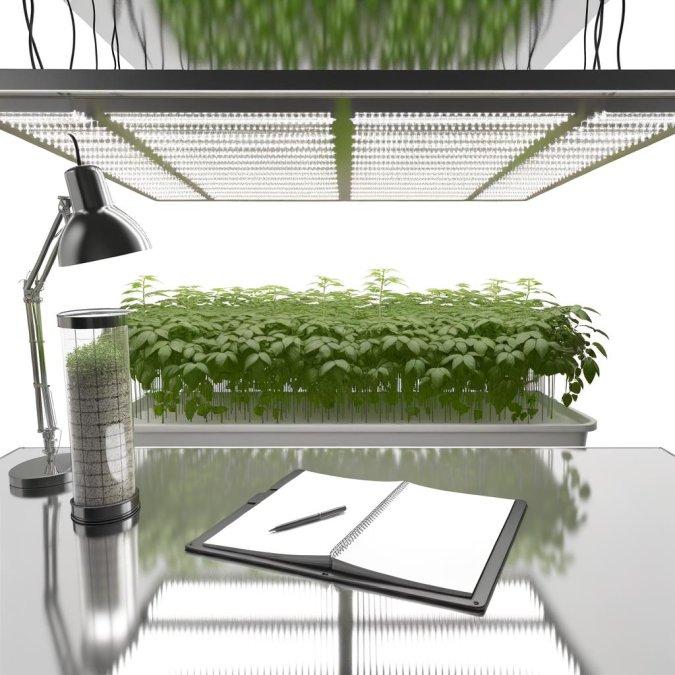
LED fixtures are widely used because they can provide useful light with manageable energy consumption and heat. The label “LED” does not confirm that a fixture covers the garden evenly.
Review the illuminated area, height adjustment, output information, timer, heat near leaves, electrical certification, and replacement options.
- Tall, weak stems: the light may be too weak, too distant, or unevenly distributed.
- Healthy center with weak edges: the advertised coverage may not match the complete planting deck.
- Damaged upper leaves: the fixture may be too close or warm, although water and nutrient problems should also be checked.
- Plants leaning toward one side: window light or fixture placement may be creating an uneven canopy.
- Rapid crowding: pruning or wider plant spacing may be more useful than extending the light schedule.
For additional lighting guidance, see our article about growing herbs indoors with LED technology.
The Nutrient Solution Replaces Several Jobs Normally Performed by Soil
Soil can hold water, store nutrients, support roots, and create spaces for air. In hydroponics, the system must provide those functions through water chemistry, growing media, circulation, aeration, and physical plant supports.
Do not treat pH and electrical-conductivity readings as decorative dashboard data. The instruments must be stored, cleaned, calibrated, and used according to their instructions. A precise-looking number from a neglected meter can be less useful than a careful visual inspection.
Hydroponics Can Reduce Some Mess While Creating Different Risks
Water and electricity must remain deliberately separated.
Keep plugs, power supplies, timers, extension connections, and control equipment away from spills and reservoir openings. Use equipment intended for the environment, follow the manufacturer’s electrical instructions, and use appropriate ground-fault protection where required.
Do not operate damaged cables, improvised connections, leaking equipment, or a pump that is not approved for its intended use. Consult a qualified professional when outlet capacity, permanent wiring, shelving loads, or local safety requirements are unclear.
Apartment Hydroponics Is Not Pest-Free
Removing soil may reduce exposure to some soil-associated pests, weed seeds, and pathogens. It does not prevent insects, mildew, algae, root disease, or contamination from entering through plants, seeds, hands, tools, open windows, produce, pets, or reused equipment.
- Fungus gnats can still appear. Moist growing media, algae, and nearby houseplants can support them.
- Aphids and whiteflies can arrive on new plants. Inspect additions before placing them beside the hydroponic garden.
- Algae develops where light reaches nutrient-rich water. Use opaque reservoirs and cover unused planting openings.
- Dense foliage reduces airflow. Crowded leaves can create conditions favorable to disease.
- Diseases can move through shared water. Remove affected plants and investigate promptly instead of allowing damaged roots to remain in circulation.
- Sticky roots can block equipment. Inspect pump intakes, channels, tubing, drain lines, and air stones.
Maintenance Becomes Part of the Harvest
Small-scale hydroponic production may require frequent attention. The system should be positioned so routine checks remain easy even on a busy day.
Observe the Plants
Check leaf color, new growth, wilting, pests, crowding, light distance, damaged foliage, and whether one plant is shading the others.
Inspect the Wet System
Confirm water level, aeration, circulation, pump sound, tubing, leaks, odor, root condition, and whether light reaches the reservoir.
Review the Measurements
Check nutrient and pH information using properly maintained equipment and compare those readings with the actual condition of the plants.
Prune and Harvest
Remove usable growth before plants reach the light or block airflow. Clear fallen leaves and old roots from wet surfaces.
Clean Between Crops
Empty the system, remove organic residue, wash accessible surfaces, and sanitize according to equipment and food-safety guidance before replanting.
Review the Room
Look for condensation, water damage, excessive humidity, blocked walkways, distracting light, unusual heat, and changes in household use.
A manufactured indoor garden may automate lighting and pump cycles, but it does not clean its own root chamber or recognize every developing plant problem. Our guide to maintaining an indoor smart garden provides a more detailed care routine.
Use Symptoms to Direct Inspection, Not to Guess
Clean Food Requires More Than Healthy-Looking Leaves
Treat the Garden as a Food-Producing Area
Wash hands before handling edible plants. Begin with clean equipment and suitable water. Keep pets, household chemicals, dirty tools, raw food, and contaminated cleaning materials away from the growing area.
Reusable tools, harvest containers, grow decks, reservoirs, and food-contact surfaces should be cleaned before they are sanitized. Follow product labels and equipment instructions rather than mixing cleaning chemicals by guesswork.
Harvest into a clean container, remove damaged plant material, and wash produce appropriately before eating.
Questions That Reveal Whether a System Will Remain Useful
Evaluate Daily Life, Not Only the Product Photograph
Maintenance becomes difficult when the only option is carrying water through the home.
Reservoir corners, pump intakes, tubing, net pots, and covers should be accessible for cleaning.
Seedling photographs do not reveal whether the canopy will remain evenly illuminated later.
Proprietary pods may simplify setup while increasing long-term dependence and cost.
A failed low-cost part should not make the complete garden unusable.
Basic lighting and circulation should not depend entirely on a cloud application.
Pump and fan noise that seems minor in a store may be disruptive beside a desk or bed.
Nutrients, meters, seeds, spare parts, cleaning tools, and harvest containers also occupy apartment space.
What Hydroponics Did — and Did Not — Revolutionize
Hydroponics made indoor food growing more independent from outdoor soil, balcony access, and seasonal sunlight. Compact systems can turn an otherwise unused area into a productive space for herbs and leafy greens.
It did not make gardening automatic. The work shifted from digging, weeding, and managing potting mix toward monitoring light, water, nutrients, roots, equipment, sanitation, and the indoor environment.
It also did not guarantee faster growth, larger harvests, lower costs, or greater sustainability in every household. Outcomes depend on crop choice, energy use, equipment life, water management, local climate, maintenance, and how much food is actually harvested and used.
Hydroponics works best in an apartment when the garden is designed around the room rather than forced into it.
Choose compact crops. Reserve a permanent location. Confirm the weight, drainage route, lighting coverage, noise, replacement parts, and cleaning access before filling the reservoir.
Begin with a system small enough to understand completely. Learn how quickly the plants use water, how the nutrient solution changes, how the roots affect pumps and channels, and how the lighting fits household life.
The revolution is not that anyone can harvest unlimited food from a tiny corner without effort. It is that people without a yard can now create a controlled growing space where a realistic selection of fresh crops can be produced throughout the year.
Sources and Further Reading
- USDA National Agricultural Library: Hydroponics
- University of Minnesota Extension: Small-Scale Hydroponics
- Oregon State University Extension: Deep Water Culture
- Oregon State University Extension: Hydro Hints Collection
- University of Minnesota Extension: Lighting for Indoor Plants
- University of Minnesota Extension: Cleaning and Sanitizing Growing Equipment
- U.S. Consumer Product Safety Commission: Home Electrical Safety Checklist

The BotaniQ Editorial Team writes and maintains practical guides about indoor gardening, smart irrigation, plant care, garden automation, and growing technology. Where relevant, articles reference official documentation, university extension resources, and other reputable sources. Content is updated when material information changes.