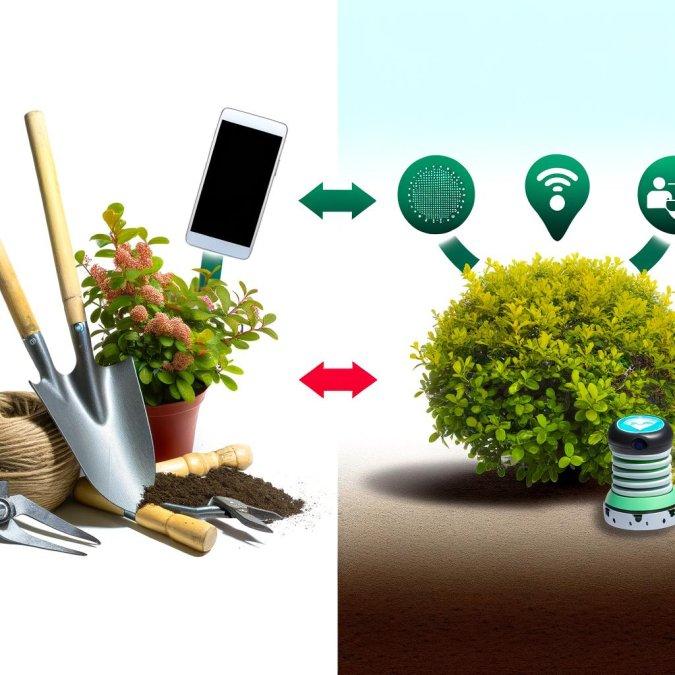
What if the future of gardening depends less on sore backs and more on data streams? What began as pure manual labor is rapidly becoming a discipline shaped by sensors, automation, and intelligent decision-making.
For centuries, gardeners relied on touch, weather instinct, and relentless physical effort to keep plants alive. Today, connected tools can track soil moisture, temperature, and plant health with a level of precision that traditional methods could rarely match.
This shift is not replacing the gardener’s role so much as redefining it. As explored in discussions around AI agent engineering, modern workflows increasingly combine human judgment with systems designed to monitor, retrieve, and respond to information in real time.
From hand watering and seasonal guesswork to remote alerts and continuous oversight, gardening has entered a new era. Understanding that evolution reveals not only how we grow plants now, but how we will manage living spaces more efficiently in the years ahead.
What Drove the Shift From Manual Gardening to Remote Monitoring Technology?
Labor pressure changed the equation first. Home gardeners had less time for daily inspection, while commercial growers could no longer afford to rely on memory, handwritten notes, and someone “just checking the beds” at the end of the day. Remote monitoring became attractive because it turned gardening from a presence-based task into a data-based workflow, especially when one person was managing multiple zones, greenhouses, or irrigation lines.
Weather volatility pushed the shift harder than most people realize. A manual routine works when seasons behave predictably; it fails when heat spikes, wind dries containers faster than expected, or a cold night hits one corner of a property differently than another. In practice, this is why tools such as Gardena Smart System and Rachio gained traction: they let growers react to changing conditions without being physically present every morning and evening.
One quick observation: gardeners rarely adopt technology because they want more screens. They do it after losing plants.
- Water costs made overwatering expensive, not just wasteful.
- Plant collections became more specialized, with tighter moisture and temperature tolerances.
- Properties became more fragmented-raised beds here, containers there, a greenhouse somewhere else.
I’ve seen the pattern repeatedly. A grower starts with a simple timer, then adds a soil sensor after missing a dry-out during a weekend trip, then moves to alerts when one valve underperforms. That progression is less about convenience and more about reducing blind spots in places where manual gardening simply cannot scale.
And yes, there’s a human reason too: peace of mind. Remote monitoring did not replace gardening knowledge; it became a way to apply that knowledge consistently, even when the gardener was stuck at work, away for two days, or managing far more plants than hands-on checking could realistically support.
How Smart Sensors, Automated Irrigation, and Garden Apps Work in Modern Gardening
What actually happens after you place a smart sensor in the soil? The device samples moisture, temperature, and sometimes conductivity at intervals, sends that data to a hub or phone, and the irrigation controller checks whether the reading crosses a threshold you set for that crop zone. In practice, a tomato bed might trigger watering at a different point than rosemary, because the controller is working from zone-specific rules rather than one timer for the whole yard.
- Soil sensor reads root-zone conditions, not just surface dryness.
- Controller decides whether to open a valve, delay a cycle, or skip watering entirely.
- App logs the event so you can adjust schedules after heat waves, rain, or transplant shock.
That middle step matters most. A good setup combines sensor input with forecast data and manual constraints, so a drip line does not run just because the calendar says Tuesday; platforms such as Rachio and Gardena Smart System are built around that logic, while broader app ecosystems increasingly use AI-generated media tools like Gemini Apps for visual planning and communication workflows. Not glamorous.
One real-world example: in a mixed kitchen garden, I’ve seen growers place one sensor near a raised bed edge and get misleading dry readings because the border heats faster than the center. Move the probe closer to the active root zone, pair it with a flow meter, and suddenly the app history starts making sense. Honestly, this is where most failures happen-not bad hardware, just bad placement.
A quick observation from the field: batteries die at the worst time, usually midsummer. If the app stops reporting, don’t trust the old schedule to carry the system; automation works best when readings, valve actions, and notifications are all verified, otherwise overwatering becomes invisible for days.
Common Mistakes to Avoid When Adopting Remote Monitoring for Home and Commercial Gardens
What usually goes wrong first? People buy remote monitoring hardware before deciding what decision the data is supposed to trigger. A moisture alert sounds useful until five raised beds, two irrigation zones, and one shaded wall all behave differently; in practice, I’ve seen growers using Gardena Smart System or Netro dashboards collect plenty of readings and still overwater because thresholds were never set by crop stage, not just by sensor output.
- Installing sensors in the most convenient spot rather than the most representative one. A probe near a drip emitter or at the edge of a container will lie to you all season.
- Treating all alerts as equal. High temperature at 2 p.m. is not the same event as root-zone dryness at dawn, yet many setups notify on both with the same urgency.
- Ignoring maintenance drift. Battery decline, algae on water-level sensors, and compacted soil around probes quietly distort data long before the app shows a failure.
One commercial example: a small greenhouse installed remote sensors to reduce labor, but left manual hose watering unchanged for “backup.” That overlap created conflicting moisture patterns, so the system appeared inaccurate when the real issue was workflow; once irrigation logs were tied to readings in Home Assistant, the false alarms mostly disappeared.
Small detail, big consequence.
Also, don’t overlook account access and alert delivery. If your monitoring stack relies on mobile sign-in prompts and they time out or expire, Google Account prompts can delay critical notifications during travel or after a device change; it sounds minor until a frost alert goes unseen overnight. Remote monitoring fails less from bad technology than from weak operating habits.
Closing Recommendations
The evolution of gardening shows that progress is not about replacing human judgment, but about using better tools to make care more precise, consistent, and sustainable. As seen across digital plant-care discussions in the Google support community, technology is most useful when it reduces friction rather than adding complexity. For gardeners, the practical choice is to adopt remote monitoring where it solves a clear problem-watering accuracy, time management, or plant health tracking-while keeping observation and seasonal knowledge at the center. The best decision is rarely full automation; it is selecting technology that supports your routine, budget, and growing goals.
Dr. Silas Sterling is a researcher and designer dedicated to the concept of Biophilic Design. Holding a doctorate in Architectural Technology, he explores how smart gardens improve mental well-being. Through Ekolye, Dr. Sterling curates innovative solutions that bring the harmony of nature into the modern digital home.