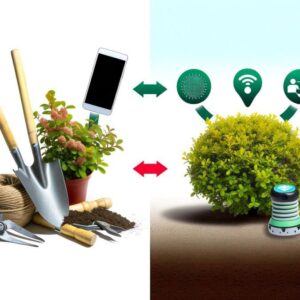

What if your garden could anticipate the season before the weather does? Artificial intelligence is transforming seasonal garden planning from a cycle of guesswork into a data-driven strategy shaped by climate patterns, soil behavior, and plant performance.
Instead of relying only on tradition or fixed planting calendars, gardeners can now use AI-powered insights to decide what to plant, when to plant it, and how to adapt as conditions shift. The result is a garden that is not only more productive, but more resilient in the face of unpredictable seasons.
From forecasting frost risks to optimizing watering schedules and crop rotation, AI is redefining how gardens respond to time, temperature, and terrain. It turns seasonal planning into a dynamic process-one that learns, adjusts, and improves with every cycle.
As environmental uncertainty grows, the real value of AI in the garden is not convenience alone, but precision. It offers a new way to align natural rhythms with informed decision-making, helping gardeners cultivate smarter with every season.
How Artificial Intelligence Is Changing Seasonal Garden Planning
What changes first when AI enters seasonal garden planning? The workflow, not just the forecast. Instead of picking planting dates from a static zone chart, gardeners now feed local weather patterns, soil readings, and crop history into tools such as Plantix or custom planning dashboards that pull live climate data; the result is a season plan that shifts week by week rather than staying locked to the calendar.
In practice, that means execution becomes more precise. A grower can map spring sowing in batches, let AI flag a likely late frost window, then delay tender crops while moving cool-season varieties forward; I’ve seen this save an entire first planting of basil and cucumbers after a warm March fooled the eye. Small detail, big difference.
- AI groups crops by actual temperature tolerance and growth speed, then rebuilds succession schedules when weather drifts off pattern.
- It links irrigation timing to predicted evapotranspiration, so summer plans adjust before heat stress shows up in leaves.
- It spots rotational conflicts early, especially in compact beds where gardeners tend to forget last season’s disease pressure.
Honestly, this is where many home gardeners get caught: they use smart recommendations but ignore data quality. If your soil moisture sensor sits in one shaded corner, the plan will skew; the machine is only as useful as the placement, the crop labels, and the notes you keep after each harvest.
A practical setup is simple: start with one bed, one season, and one decision stream. Use AI to set sowing windows, compare them with your own observations, then revise the schedule after the first weather surprise rather than treating the output like a final answer.
Using AI Tools to Build Smarter Planting Schedules and Crop Rotations
What does a smarter planting schedule actually look like in practice? It starts with feeding an AI tool the right constraints: last frost date, bed dimensions, crop maturity days, succession windows, and the disease history of each bed. With ChatGPT or Google Sheets paired with formulas, you can generate a calendar that does more than estimate sowing dates-it flags conflicts such as brassicas returning to the same bed too soon or tomatoes landing after another heavy feeder.
- Map each bed by crop family, not just crop name; AI handles rotation better when “nightshades” and “alliums” are labeled consistently.
- Add blackout periods for soil recovery, cover crops, or irrigation repairs so the schedule reflects real garden downtime.
- Ask the tool to optimize for harvest spacing, not maximum planting density; that usually produces a steadier kitchen supply.
A real scenario: in a four-bed backyard garden, one bed carried peppers last summer and showed early blight nearby. Instead of simply moving tomatoes elsewhere, an AI-assisted plan can push solanaceae out for two full seasons, slot in bush beans to ease nitrogen demand, then follow with garlic where irrigation stays lighter through winter. That sequence is hard to visualize manually when you are also trying to stagger lettuce every 12 days.
Small thing.
I’ve seen gardeners trust app defaults too quickly. Honestly, this is where schedules go sideways: the system suggests perfect intervals, but your cold frame stays usable two weeks longer than the regional norm, or slug pressure wipes out the first spinach sowing. AI is strongest when you treat it like a draft planner, then correct it with what your plot keeps teaching you.
If you want one practical rule, make the tool justify every rotation decision bed by bed. When it cannot explain why a crop belongs in that slot, the schedule is probably too brittle for a real season.
Common AI Garden Planning Mistakes and How to Optimize Results Each Season
Why do AI garden plans fail even when the model looks “smart”? Usually because growers feed it neat averages instead of messy site reality. A planning engine can suggest ideal sowing dates, but if your north fence holds cold air two weeks longer than the rest of the yard, the schedule is wrong on day one; in practice, I’ve seen gardeners fix this by updating inputs weekly in Google Sheets and cross-checking saved seasonal form data in Chrome when recording variety, bed location, and planting windows.
- Ignoring microclimates: split the garden into heat, wind, drainage, and shade zones before asking AI for spacing or timing recommendations.
- Training on last year only: include at least two contrasting seasons, because one unusually wet spring can distort irrigation and disease predictions.
- Accepting full automation: keep a manual override for succession planting, especially after pest damage or a surprise warm spell.
Small mistake. Big consequence.
Another common miss is treating AI outputs as crop plans rather than decision drafts. If the system recommends heavy tomato placement in summer, but your notes show recurring late blight in that bed, rotate anyway; the better workflow is AI suggestion first, field observation second, then a quick revision before buying seed or transplants.
Oddly enough, the best optimization often happens after something goes wrong. I once watched a gardener use an AI schedule that pushed lettuce too late into early summer, and instead of abandoning the tool, she tagged that bed as a heat trap, shifted spring cutoffs earlier, and improved fall timing too. That is the real seasonal advantage: not blind trust, but faster correction cycles.
The Bottom Line on The Impact of Artificial Intelligence on Seasonal Garden Planning
Artificial intelligence is most valuable in seasonal garden planning when it supports, rather than replaces, practical judgment. The strongest results come from using data-driven forecasts to time planting, irrigation, and crop rotation more precisely, while still adjusting for local soil conditions, microclimates, and plant performance. For gardeners and growers, the key decision is not whether to use AI, but how much to rely on it: start with tools that improve scheduling and resource use, then measure outcomes season by season. In the end, smarter planning means combining technology with observation to build a garden that is more resilient, efficient, and productive.

Dr. Silas Sterling is a researcher and designer dedicated to the concept of Biophilic Design. Holding a doctorate in Architectural Technology, he explores how smart gardens improve mental well-being. Through Ekolye, Dr. Sterling curates innovative solutions that bring the harmony of nature into the modern digital home.