How much water are you pouring into the ground that your plants never actually use? In many landscapes, overwatering does more damage than drought-wasting water, weakening roots, and inviting disease.
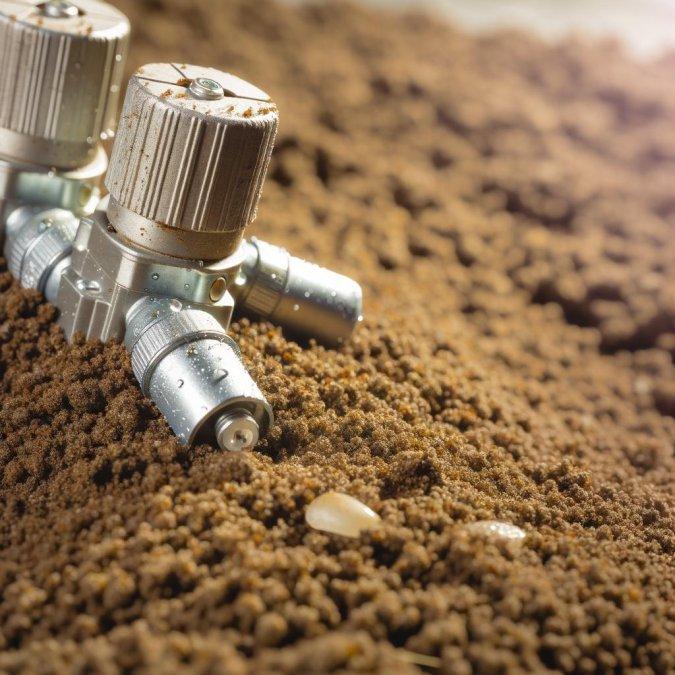
Soil moisture sensors change outdoor irrigation from guesswork to measurement. Instead of watering by habit or weather alone, they show when the root zone truly needs water and when it does not.
That means healthier lawns, stronger trees, and lower water bills with less runoff and fewer saturated beds. For homeowners, landscapers, and facility managers, smarter watering is no longer just a sustainability goal-it is a performance advantage.
As interest grows in more efficient landscape management alongside broader conversations around system updates and optimization, even mainstream tech coverage such as Microsoft-focused reporting reflects how measurement-driven improvements are shaping decision-making everywhere. In irrigation, the same principle applies: better data leads to better results.
How Soil Moisture Sensors Improve Outdoor Watering Efficiency and Plant Health
What changes when watering is triggered by soil conditions instead of the calendar? The system stops guessing. A moisture sensor reads what is happening at root depth, then either allows or blocks irrigation, which means turf, shrubs, and beds are watered when they can actually use it rather than after a cool night, before rain, or while lower soil layers are still wet.
In practice, that improves efficiency through control points that timers alone miss:
- It prevents short, frequent cycles that keep the surface damp but leave deeper roots dry.
- It reduces runoff on heavy soils by delaying irrigation until the profile has room to absorb water.
- It cuts disease pressure by avoiding repeated leaf-wetness conditions caused by unnecessary morning or evening watering.
Short version.
On a mixed landscape, placement matters more than people expect. I’ve seen one sensor installed near a downspout override an entire lawn zone and create a false “wet” reading for days; a better workflow is to place sensors in representative areas, verify depth with a soil probe, and review readings through a controller platform such as Rachio or Hunter Hydrawise before changing runtimes.
A real example: a sunny foundation bed with young hydrangeas and a nearby established shrub border should not be treated the same. The sensor helps the controller skip irrigation for the mature shrubs after a light storm while still allowing a separate zone to water newer plants that have a smaller effective root zone. That separation protects plant health in both directions, less stress from drought, less root decline from chronic saturation.
And honestly, this is where many outdoor systems quietly fail: they water the easiest schedule, not the actual landscape. When sensor data is used to fine-tune zone runtime and threshold, plants develop steadier root growth and the irrigation system becomes far less wasteful under changing weather.
How to Install and Calibrate Soil Moisture Sensors for Smarter Irrigation Scheduling
Placement comes first. Install each sensor in the active root zone, not at an arbitrary depth: roughly 4 to 6 inches for turf, 6 to 8 inches for annual beds, and often deeper for shrubs if roots are established below surface mulch. Keep probes a few inches away from emitters or spray heads so you measure average soil condition instead of the wettest spot; in practice, I also avoid edges near pavement because reflected heat skews drying patterns.
- Insert the probe into undisturbed soil with full contact along the sensing surface; air gaps are a quiet way to ruin readings.
- Group stations by irrigation behavior, then place one sensor in the driest representative zone rather than the greenest corner.
- Use the controller or app to label depth, plant type, and exposure on day one; Hydrawise and Rachio both make later troubleshooting much easier when zones are clearly tagged.
Now calibrate it in the field. Water the zone thoroughly, wait until free drainage stops-usually the next day for loam, longer for clay-then log that reading as your upper reference; after that, let the soil dry until plants just begin to show mild afternoon stress, and record the lower reference without pushing into damage. That simple wet-point/dry-point workflow is far more useful for scheduling than chasing a factory number.
Quick observation: freshly landscaped beds often fool people because mulch stays cool while the soil below dries unevenly. I have seen crews install a probe under dripline splash and wonder why irrigation never starts; honestly, it happens a lot.
For example, in a south-facing shrub bed, a sensor at 8 inches may still read acceptable moisture while the top 3 inches are bone dry and new roots are struggling. If that zone contains young plants, recalibrate around establishment depth for the first season, or you will under-water based on a sensor placed for mature root systems. Misplaced sensors do not just miss data-they teach the controller the wrong habit.
Common Soil Moisture Sensor Mistakes That Waste Water and Reduce Accuracy
Wrong placement causes more bad irrigation decisions than bad hardware. A sensor sitting near a sprinkler head, downspout edge, or shady wall records moisture that the root zone never sees uniformly, so the controller keeps delaying irrigation while turf ten feet away is already stressed. In mixed beds, I’ve seen one probe buried in compost-rich planting soil “protect” a whole valve zone that also served sandy perimeter areas; the result was runoff in one spot and wilt in another.
- Installing too shallow measures evaporation swings, not usable root moisture; too deep can hide stress in lawns and annual beds.
- Leaving air gaps around the probe after installation skews readings for days or weeks, especially in coarse soils.
- Using one threshold year-round ignores seasonal rooting changes and lower winter water demand.
Another expensive mistake is trusting raw numbers without field verification. Yes, really. After setting up Toro Evolution or Rachio, walk the zone with a soil probe or even a hand trowel after irrigation and compare what the sensor says with actual wetting depth; if those two do not agree, the automation is only speeding up the error.
A quick observation from the field: mulch often fools people. A bed under thick bark mulch can look dry on top while the sensor below stays wet, and homeowners override the schedule anyway, adding water the roots did not need.
Maintenance gets ignored because the system appears to be “smart.” Dirty contacts, damaged cable insulation, and sensor drift after a season of fertilizer salts can quietly push readings off enough to trigger unnecessary cycles, so a mid-season check is not optional if water savings matter.
Expert Verdict on Using Soil Moisture Sensors to Improve Outdoor Watering Efficiency
Soil moisture sensors deliver the biggest benefit when they guide watering decisions instead of simply automating extra irrigation. The practical goal is consistency: apply water only when root-zone moisture drops below the level your landscape plants can actually use. For most property owners, the best choice is a durable, weather-resistant sensor that integrates easily with an existing controller and can be adjusted by season. If you want better water efficiency, lower runoff, and healthier plants, start with one well-placed sensor zone, track results, and expand only where the data improves scheduling. Better watering is not about more technology-it is about more accurate timing.

Dr. Silas Sterling is a researcher and designer dedicated to the concept of Biophilic Design. Holding a doctorate in Architectural Technology, he explores how smart gardens improve mental well-being. Through Ekolye, Dr. Sterling curates innovative solutions that bring the harmony of nature into the modern digital home.